
What Is Garnet? Types, Colors, Properties and Characteristics of Garnet
Garnet is a family of silicate minerals known for its remarkable range of colors and chemical compositions. This guide explores how garnet forms, its major varieties, natural colors, gemstone uses, identification methods and proper care.
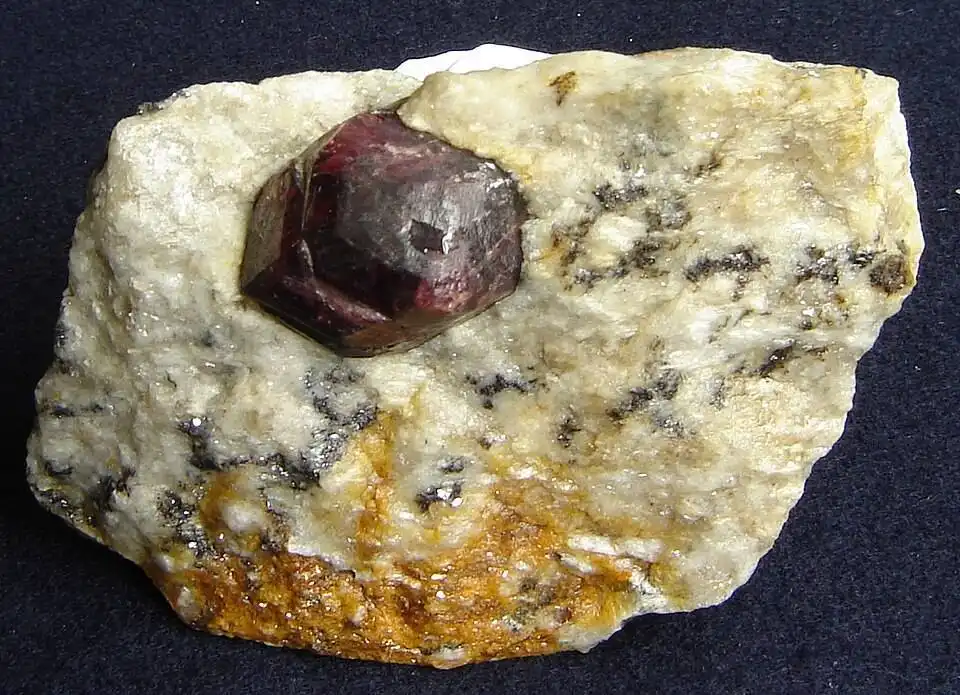
What Is Garnet?
Garnet is not a single mineral but a group of silicate minerals that share a similar crystal structure while differing in chemical composition. Although best known for its deep red color, garnet can also be green, orange, yellow, purple, brown or nearly black.
Some garnets are transparent enough to be cut into gemstones, while others occur as opaque crystals within their host rocks. Their varied compositions and formation environments make them valuable to both gemologists and geologists.
What Does Garnet Mean? The Origin of Its Name
The name “garnet” is commonly traced to the Latin word granatus , associated with seeds or the pomegranate. The resemblance of red garnet crystals to pomegranate seeds helped the name take hold across languages.
In historical Persian texts, the term “la’l” was sometimes used for red gemstones, but “la’l” and garnet are not exact mineralogical equivalents . Historical and trade names do not always correspond to modern mineral classifications.
How does garnet form?
Many natural garnets form through rock metamorphism under suitable pressure and temperature conditions. As rocks undergo metamorphism, their original minerals react and elements become incorporated into newly formed crystals, including garnet. This is why garnet is commonly found in schist and gneiss.
Garnet can also develop in certain igneous rocks and in rocks affected by contact metamorphism. Weathering and erosion may release garnet crystals from the host rock and transport them into river sediments. Common crystal habits include dodecahedral and trapezohedral forms.
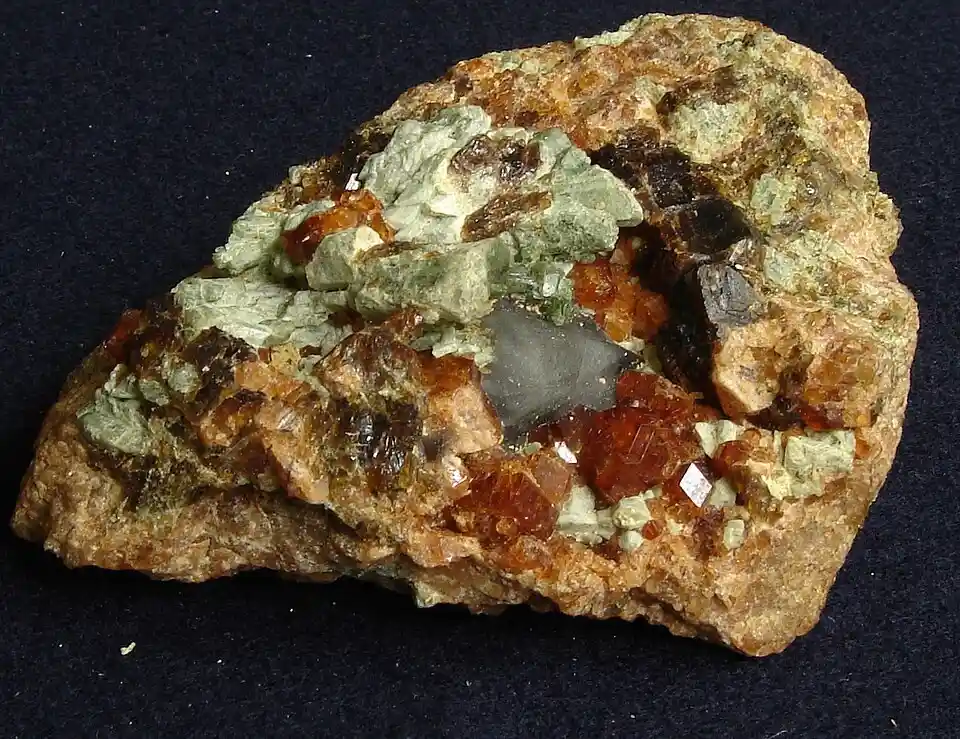
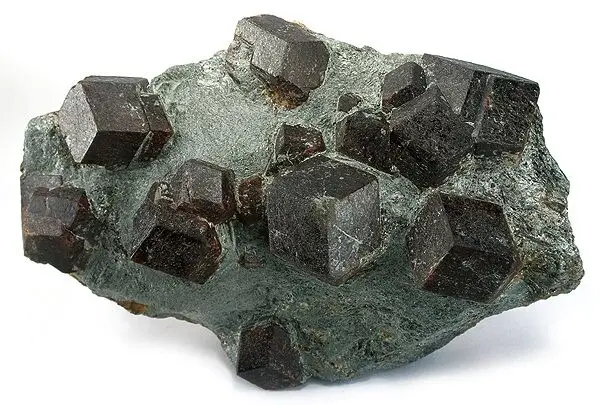
Physical and Chemical Properties of Garnet
Garnet minerals crystallize in the cubic (isometric) system. However, differences in elemental composition give them varying hardness, specific gravity and color. The table below summarizes typical properties of the garnet group; individual specimens may differ.
| Property | Typical Characteristics |
|---|---|
| Mineral Class | Silicates |
| Crystal System | Cubic (isometric) |
| General Chemical Formula | X₃Y₂(SiO₄)₃; the elements occupying the X and Y sites vary by species |
| Mohs Hardness | Approximately 6.5–7.5, depending on species |
| Luster | Usually vitreous, sometimes resinous |
| Transparency | Transparent, translucent or opaque |
| Specific Gravity | Varies; generally around 3.4–4.3 |
| Cleavage | No distinct cleavage; fracture may be uneven |
For example, the chemical formula of almandine garnet is Fe₃Al₂(SiO₄)₃. Therefore, there is no single chemical formula that describes every garnet species. Mohs hardness indicates resistance to scratching, not overall resistance to impact or breakage.
What Are the Main Types of Garnet?
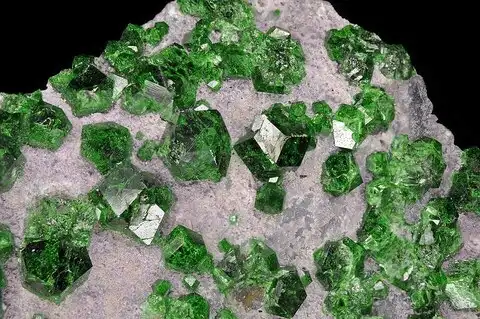
Six major garnet species commonly discussed in gemology are almandine, pyrope, spessartine, grossular, andradite and uvarovite . Each has a different composition, and color alone is not enough to identify a species reliably.
1. Almandine
Typically deep red, wine red or reddish brown; abundant in many metamorphic rocks.
2. Pyrope
Known for red to purplish-red colors; often forms a solid-solution series with almandine.
3. Spessartine
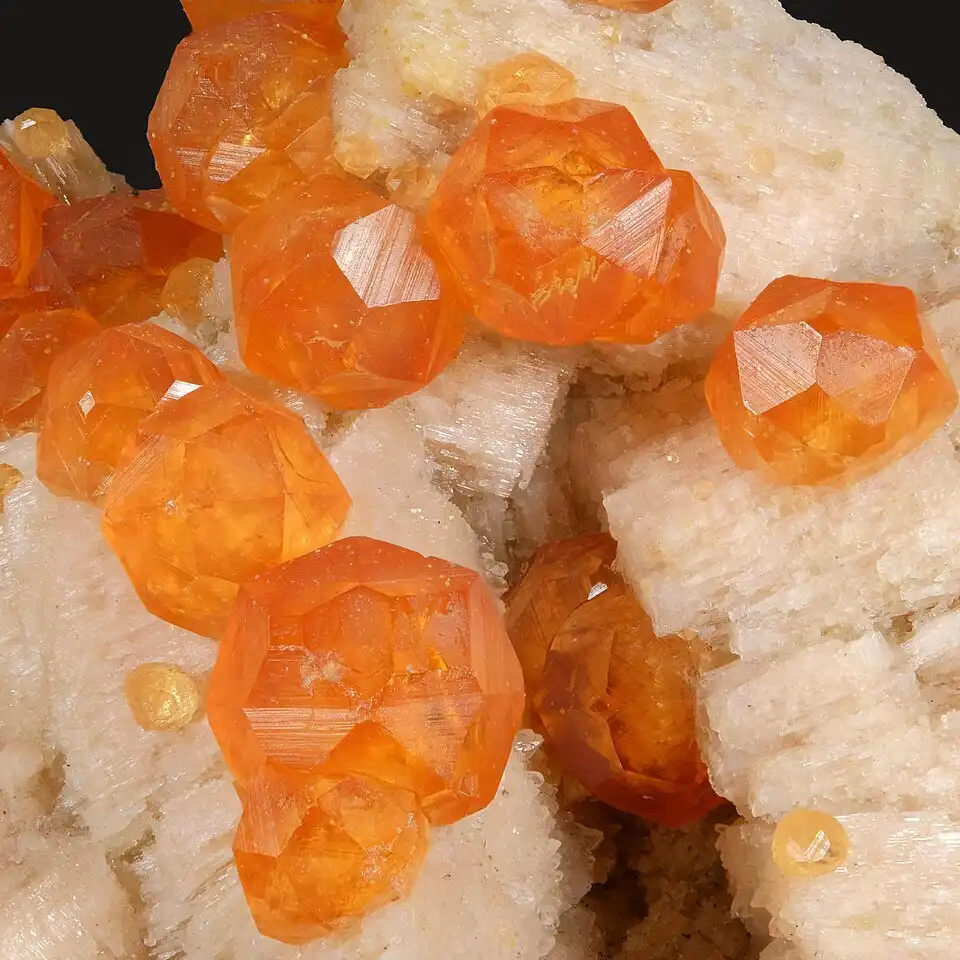
Ranges from vivid orange to reddish orange. Transparent, gem-quality material is especially sought after.
4. Grossular
Occurs in colors ranging from yellow and orange to green. Well-known varieties include green tsavorite and hessonite.
5. Andradite
Includes prized green demantoid as well as dark-colored melanite.
6. Uvarovite
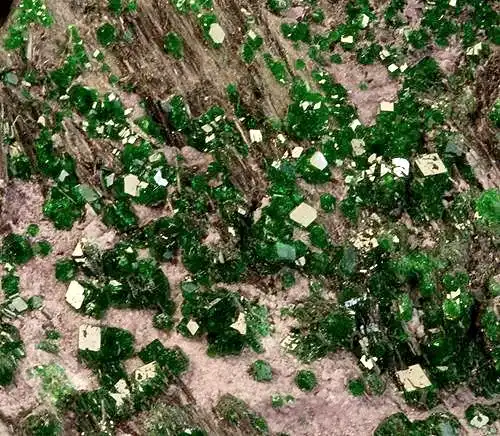
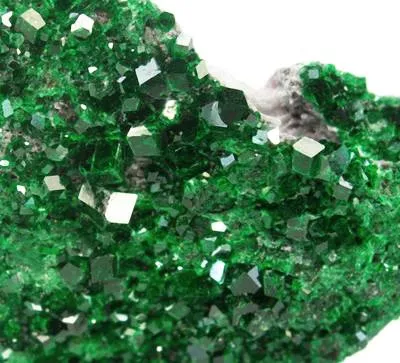
Usually occurs as small green crystals and is particularly popular among mineral collectors.
Rhodolite is a gem variety, generally associated with purplish-pink pyrope–almandine compositions, rather than a separate mineral species. Similarly, demantoid is a variety of andradite, while tsavorite is a variety of grossular.
What Colors Does Garnet Come In, and Why?
Garnet color depends on chemical composition and the presence of elements such as iron, manganese, chromium and vanadium within the crystal structure. Two similarly colored stones may belong to different species, and some garnets display a color-change effect under different lighting.
Red and Burgundy Garnet
The most familiar garnet colors, particularly in almandine and pyrope; shades range from deep red to purplish red.
Green Garnet
Tsavorite and demantoid are notable green garnet varieties and can be highly valuable.
Orange Garnet
Spessartine and some grossular garnets occur in orange to reddish-orange shades.
Black and Brown Garnet
Certain dark varieties, including melanite, can appear almost black in ordinary lighting.
Purple and Pink Garnet
These shades occur in some pyrope–almandine compositions, including rhodolite garnet.
Color-Change Garnet
Some rare garnets show different apparent colors depending on the light source.
The History of Garnet: From Ancient Civilizations to Modern Jewelry
Garnet has been used as a gemstone for thousands of years. Examples appear in jewelry and decorative objects from ancient Egypt and Rome. Its rich red color made it a popular choice for rings, necklaces and engraved seals.
Bohemian red garnets later became particularly famous in European jewelry. Today, green, orange and color-change varieties have broadened garnet’s appeal far beyond the traditional image of a pomegranate-red gemstone.
Where Is Garnet Found Around the World?
Garnet occurs worldwide rather than in any single climate or continent. Depending on the species, it can be found in metamorphic rocks, certain igneous rocks and secondary sediment deposits. Gem-quality garnets have been reported from India, Sri Lanka, Tanzania, Kenya, Madagascar, and parts of Europe and the Americas.
Although garnet is widespread, high-quality gemstone material is far less common. Many deposits yield only limited quantities of crystals with the clarity, desirable color and size needed for cutting.
Where Is Garnet Found in Iran?
Garnet has also been documented in different geological settings across Iran, including metamorphic and contact-metamorphic environments. Geological studies mention occurrences in parts of Hamedan and Kerman , and various garnet types have been reported elsewhere in the country.
It is important to distinguish between the geological occurrence of garnet and an economically viable, operating mine . Claims about specific mines, reserve estimates or precise local varieties should be supported by geological maps and official exploration reports.
What Is Garnet Used For?
Garnet is best known for the use of clear, attractive crystals in jewelry making . It appears in rings, earrings, necklaces, pendants and collectible pieces. Uncut specimens with distinctive natural crystal shapes are also valued by mineral collectors.
Beyond its decorative appeal, garnet plays an important role in geology: its composition can reveal information about the metamorphic history of its host rock. Opaque or non-gem-quality material may also be used in industrial applications.
What Is Industrial Garnet? Uses Beyond Gemstones
Some mined garnet, particularly material rich in almandine, is processed into industrial garnet sand . It is used for abrasive blasting of metal surfaces, waterjet cutting and certain filtration media. Particle size, purity and physical performance matter more for these applications than appearance or gemstone color.
For details on processing, mesh sizes, applications and pricing, visit our industrial garnet sand page . This article focuses on garnet as a mineral and gemstone rather than on industrial purchasing specifications.
How to Identify Natural Garnet
An attractive appearance or red color does not prove a stone is garnet. Other natural gems and synthetic materials can look similar. A trained gemologist can identify a specimen by examining its refractive index, specific gravity, inclusions and microscopic features .
Many natural garnets are transparent and eye-clean, so the absence of visible inclusions does not indicate a fake. Scratch tests, boiling water and heating are unreliable identification methods and may damage the stone. For valuable purchases, an independent report from a reputable gemological laboratory is a better choice.
Garnet vs. Ruby and the Historical Term “La’l”
Red garnet and ruby may look alike, but they belong to different mineral groups. Ruby is a variety of corundum with a Mohs hardness of 9 , while garnet belongs to the silicate group and usually has a hardness of about 6.5–7.5. Their refractive indices, optical behavior and other identifying properties also differ.
The Persian term “la’l” is a historical name used for certain red gemstones and does not necessarily mean garnet; it may also refer to red spinel. Accurate identification depends on the mineral’s scientific name.
How to Clean and Care for Garnet
To clean most garnet jewelry, use lukewarm water, a little mild soap and a soft cloth or very soft brush. Dry the gemstone thoroughly and store it separately from harder gems to reduce scratching.
Avoid sudden temperature changes, hot steam and harsh chemicals. For fractured or treated stones, consult a professional before ultrasonic cleaning. Check the prongs and settings of garnet rings periodically to make sure the stone remains secure.
Frequently Asked Questions About Garnet
What is garnet?
Garnet is a group of silicate minerals that share a similar crystal structure but occur in multiple species and colors.
How does garnet form?
Many garnets form in metamorphic rocks under suitable temperatures and pressures. Some also occur in igneous environments.
How many types of garnet are there?
Six widely recognized species in gemology are almandine, pyrope, spessartine, grossular, andradite and uvarovite, although the broader mineral group includes additional species.
Is garnet the same as ruby?
No. Ruby is a variety of corundum and differs from garnet in composition and hardness.
How can I tell if garnet is natural?
Reliable identification requires gemological expertise and testing. Color and home tests alone are not sufficient.
Is garnet found in Iran?
Yes. Garnet occurrences have been reported in parts of Iran, although a mineral occurrence does not necessarily indicate an active, economically viable mine.
What is garnet used for?
Garnet is used in gemstone jewelry and mineral collections, while some material is processed for industrial applications.
Does garnet have scientifically proven healing properties?
Garnet has traditional associations with energy and love, but there is no scientific evidence that it has direct healing effects.
Scientific References
The scientific background of this guide draws on publications from the Gemological Institute of America (GIA) and United States Geological Survey (USGS) . For mineral specimens and the composition of almandine, the Mindat mineral database provides additional reference information.