
What Is Waterjet Cutting? A Practical Guide to Abrasive Waterjet and Garnet Selection
Waterjet cutting uses a high-pressure stream of water to cut materials with minimal thermal effect. For metals, stone, ceramics, glass and many composites, abrasive particles are added to the water stream. This guide explains how abrasive waterjet cutting works, where it is used, what affects cut quality, and how to select suitable garnet abrasive for the machine and application.
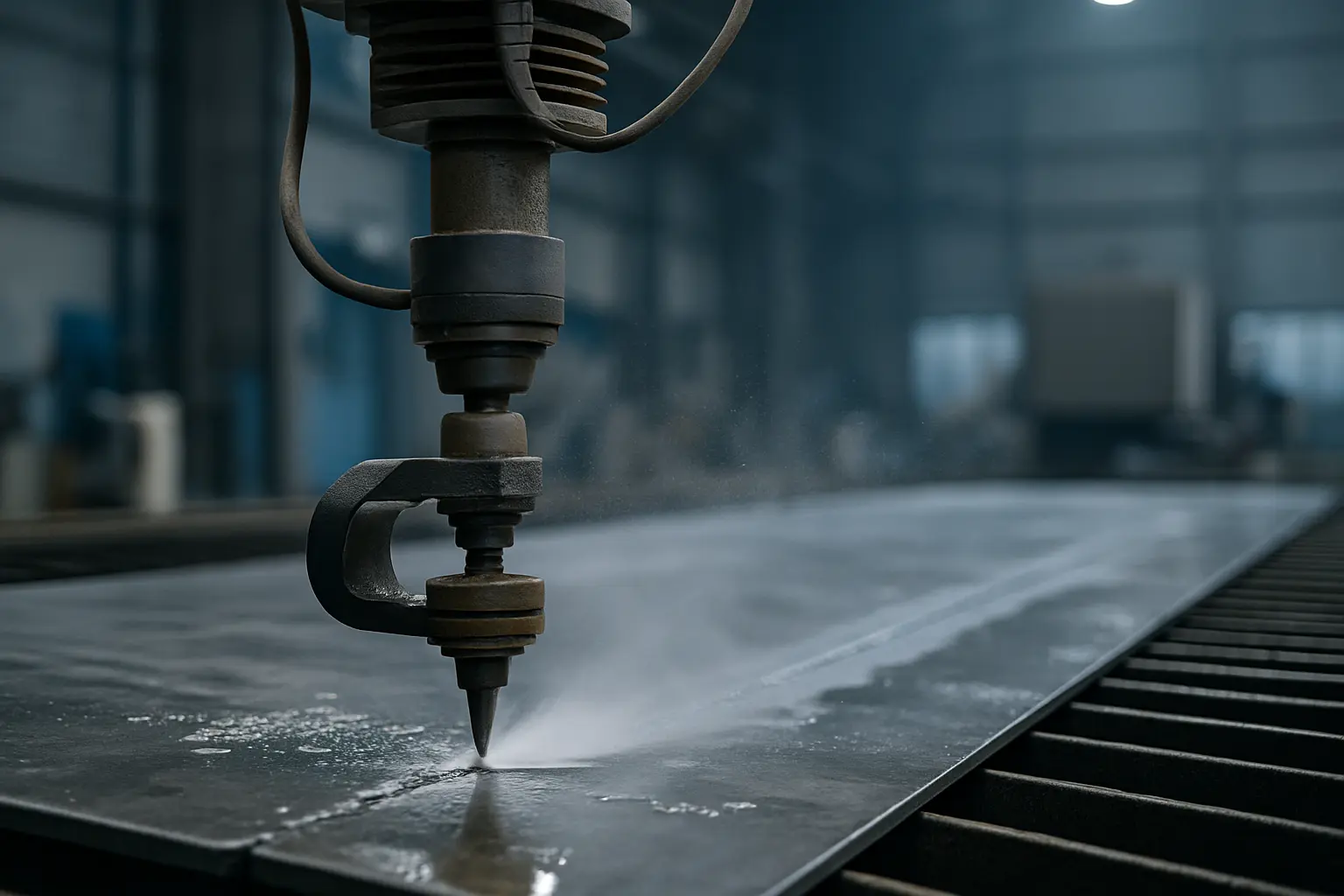
What Is Waterjet Cutting?
Waterjet cutting is a controlled machining process in which water is pressurised and forced through a very small orifice to form a narrow, high-velocity jet. On CNC waterjet systems, the cutting head follows a programmed path to separate the material with very little thermal influence.
Pure waterjet cutting can be suitable for softer materials such as foam, rubber, paper, some plastics and food products. For harder materials such as carbon steel, stainless steel, aluminium, stone, ceramics and many composites, abrasive particles are introduced into the water stream. This process is known as abrasive waterjet cutting.
How Does Waterjet Cutting Work?
Generate High-Pressure Water
A high-pressure pump brings filtered water to the operating pressure required by the machine design.
Form the Water Jet
The water passes through a very small orifice and becomes a narrow, fast and concentrated jet.
Introduce the Abrasive
In an abrasive waterjet system, dry garnet is fed from the abrasive hopper into the mixing chamber.
Accelerate Through the Mixing Tube
Water and abrasive align inside the mixing tube and form a high-energy abrasive jet.
Cut Along the CNC Path
The cutting head follows the programmed CAD or DXF path and removes material by controlled erosion.
Pure Waterjet vs. Abrasive Waterjet Cutting
Pure Waterjet Cutting
Uses only a high-velocity water jet and is generally suited to materials that can be separated without mineral abrasive.
- Foam, rubber and sealing materials
- Paper, cardboard and selected textiles
- Some plastics and food products
Abrasive Waterjet Cutting
Adds mineral abrasive to the water stream to increase cutting capability for harder and thicker materials.
- Carbon steel, stainless steel, aluminium and alloys
- Stone, ceramics and non-tempered glass
- Composites and multilayer materials
Advantages and Limitations of Waterjet Cutting
Cold Cutting
Reduces local heat-related changes such as hardening, oxidation and thermal distortion.
Wide Material Range
Can cut many metals and non-metals when the process is configured correctly.
Narrow Kerf
Can support closer nesting of parts and help reduce material waste in suitable layouts.
Complex Geometry
CNC toolpaths make custom parts and intricate shapes possible without a conventional cutting tool.
Adjustable Edge Quality
Traverse speed and machine settings can be balanced between productivity and the required edge finish.
Operating Cost
Abrasive consumption, cutting time, consumable wear and sludge handling all contribute to total cost.
| Criterion | Abrasive Waterjet | Laser | Plasma |
|---|---|---|---|
| Thermal Effect | Very low | Heat-affected zone is present | Heat-affected zone is present |
| Material Range | Very broad | Depends on machine type, power and material | Mainly electrically conductive materials |
| Thick Material | Possible, generally at lower traverse speed | Depends on material and laser power | Suitable for many metal plate applications |
| Edge Quality | Adjustable and strongly linked to cutting speed | Often good within the machine’s intended operating range | May require secondary edge cleaning in some applications |
| Consumables | Water, garnet and wear parts | Gas, energy and optical components | Gas, electrodes and nozzles |
Are Garnet, Silica and Copper Slag All Suitable for Waterjet Cutting?
AZ Garnet supplies garnet, silica and copper slag for industrial applications, but these materials are not interchangeable. Silica-based media and copper slag are more commonly considered for selected abrasive blasting and surface-preparation work, while garnet is the established abrasive for abrasive waterjet cutting.
| Abrasive | Suitability for Waterjet | Technical Consideration | Typical Industrial Use |
|---|---|---|---|
| Garnet | Primary choice | Useful combination of hardness, density and controllable particle-size distribution for waterjet feed systems | Waterjet cutting and industrial abrasive blasting |
| Silica | Not a general waterjet recommendation | Particle distribution, breakdown behaviour and crystalline-silica hazards require separate evaluation | Selected industrial applications with appropriate safety controls |
| Copper Slag | Not a standard substitute for waterjet garnet | Composition, particle shape and impurities may not suit the abrasive feed system or required cut consistency | Abrasive blasting and heavier surface-removal applications |
Why Is Garnet Widely Used for Abrasive Waterjet Cutting?
In abrasive waterjet cutting, the abrasive particles perform most of the material removal. Almandine garnet is widely used because it offers a practical combination of hardness, density, industrial availability and the ability to be processed into controlled grades.
- Suitable hardness for transferring energy into engineering materials
- Useful particle density for maintaining momentum in the water stream
- Available in different mesh sizes to balance cutting speed and edge quality
- Can be specified for particle-size distribution, fines and cleanliness
- More predictable feeding when product quality and batch consistency are controlled
“Waterjet garnet” is more than a material name. The product should be dry, clean and appropriately graded for the abrasive delivery system, orifice and mixing tube used by the machine.
Explore Industrial GarnetChoosing Garnet Mesh Size for Waterjet Cutting
80 mesh garnet is a common starting grade for many abrasive waterjet systems, but final selection should match the orifice, mixing-tube diameter, operating pressure, material thickness and machine-manufacturer recommendations. In general, a higher mesh number corresponds to a finer particle size.
| Common Grade | General Behaviour | Potential Use | Selection Note |
|---|---|---|---|
| 50 or 60 Mesh | Coarser particles with greater individual particle mass | Selected rougher cuts or applications prioritising removal rate | Use only where fully compatible with the feed system and mixing tube |
| 80 Mesh | Common balance of cutting performance, consumption and edge quality | General cutting of metal, stone and engineering materials | Widely used baseline grade for many systems |
| 100 or 120 Mesh | Finer particles with potential for a finer cutting stream | More detailed work and selected applications requiring finer edges | May require different settings and can reduce removal rate |
What Affects Waterjet Cut Quality?
Water Pressure and Flow
Low actual pressure or unstable flow can reduce cutting performance and process consistency.
Orifice and Mixing Tube
Wear, poor alignment or unsuitable diameters can affect kerf width, taper and jet stability.
Abrasive Flow Rate
More abrasive is not always better; excessive feed can waste media while insufficient feed can reduce cutting rate.
Traverse Speed
Moving too quickly can increase lag lines and reduce finish quality toward the bottom of the cut.
Stand-Off Distance
Increasing nozzle-to-workpiece distance allows the jet to spread and reduces energy concentration at the cut.
Garnet Quality
Moisture, fines, impurities and inconsistent grading can cause unstable abrasive feed or blockage.
Industrial Applications of Waterjet Cutting
Metal Fabrication, Machinery and Tooling
Cutting carbon steel, stainless steel, aluminium, copper and alloys for custom parts, flanges, plates and machine components.
Stone, Ceramics and Architectural Work
Producing inlays, logos, geometric patterns and custom pieces from natural stone, porcelain and ceramics with suitable toolpath planning.
Glass and Mirrors
Cutting machinable glass before tempering, using appropriate piercing strategies and parameters to reduce the risk of cracking.
Aerospace and Heat-Sensitive Components
Cutting materials and alloys where preserving edge properties and avoiding significant thermal influence is important.
Composites and Multilayer Materials
Cutting selected composites without thermal burning; piercing strategy should be tested where delamination is a concern.
Typical Waterjet Cutting Workflow
Review the Drawing
Check the CAD, DXF or dimensional drawing and confirm open and closed toolpaths.
Review the Material
Confirm material type, thickness, raw dimensions, piercing sensitivity and required edge quality.
Set Process Parameters
Select garnet mesh and flow rate, pressure, traverse speed, stand-off distance and piercing method.
Nest and Secure the Workpiece
Arrange parts to reduce waste where possible and secure the material against movement, flotation or vibration.
Test and Produce
Run a trial cut, then inspect edge quality, dimensions, taper and surface condition before full production.
Waterjet Cutting Safety and Maintenance
Waterjet systems operate at extremely high pressure, and the jet can cause severe injury. Guards, interlocks, manufacturer procedures and appropriate personal protective equipment should never be bypassed.
Guards and Interlocks
Keep doors, covers and interlocks functional and do not access the cutting area while the system is operating.
Eye and Hearing Protection
Use protection appropriate to the workplace assessment and machine operating environment.
Leak Inspection
Inspect high-pressure fittings, hoses and the cutting head only according to the manufacturer’s procedures.
Keep Garnet Dry and Clean
Moisture and contamination can cause clumping, blockage and inconsistent abrasive feed.
Secure the Workpiece
Control movement, vibration, flotation or the risk of parts falling into the catcher tank.
Water and Sludge Management
Manage contact and disposal based on the workpiece material and any contaminants present in the waste stream.
Common Mistakes When Buying and Using Waterjet Garnet
- Buying only on bag price: Downtime, blockage, cutting rate and consumable wear can have a larger impact on total operating cost.
- Selecting mesh without considering the mixing tube: Unsuitable particle size can destabilise abrasive flow or restrict the feed path.
- Storing garnet in damp conditions: Moist abrasive can clump and feed inconsistently.
- Ignoring excessive fines: Fine dust can interfere with feeding and reduce process stability.
- Overfeeding abrasive: Increasing abrasive flow does not always increase cutting speed and may simply increase cost.
- Reusing spent garnet without proper processing: Used abrasive is mixed with water, kerf material and fractured particles and should not be returned directly to the hopper.
Frequently Asked Questions About Waterjet Cutting
What is the most common abrasive for waterjet cutting?
Properly graded almandine garnet is widely used for abrasive waterjet cutting because its hardness, density, cleanliness and controlled particle-size distribution support consistent feeding and cutting performance.
Is 80 mesh garnet suitable for every waterjet machine?
80 mesh is a common grade for many systems, but compatibility should still be checked against the orifice diameter, mixing tube, pressure and the machine manufacturer’s recommendations.
Can silica or copper slag be used instead of garnet in a waterjet?
They are not general-purpose substitutes for waterjet garnet. Any alternative abrasive should only be considered after confirming machine compatibility, particle-size distribution, cleanliness and its effect on consumable parts.
Does waterjet cutting burn or thermally distort the workpiece?
Waterjet cutting does not create a significant heat-affected zone, so thermal burning and heat distortion are much lower concerns than with thermal cutting methods. Thin or flexible material still needs to be supported and secured correctly.
How thick can a waterjet cut?
There is no single thickness limit that applies to every machine. Material type, pressure, pump capacity, mixing tube, required edge quality and acceptable cutting time determine whether a given thickness is practical and economical.
Can waterjet garnet be recycled?
Recovery requires suitable washing, drying, particle separation and contamination control. Wet spent garnet should not be returned directly to the machine hopper without proper processing and quality checks.
What information is useful when requesting a waterjet garnet quote?
Useful details include machine model, current mesh size, orifice and mixing-tube diameters, materials and thicknesses being cut, monthly consumption, packaging preference and delivery location.
Stable Waterjet Performance Starts with the Right Garnet
Waterjet cutting performance depends on more than pump pressure. Garnet mesh size, cleanliness, dryness and grading, together with the orifice, mixing tube, traverse speed and maintenance condition, all affect cut quality and operating cost. The abrasive should be selected around the actual machine setup and the material being cut.