
Industrial Sandblasting with Natural Garnet
Surface cleaning of metals – free of free silica and substrate damage.
What Is Sandblasting?

Sandblasting, also known as abrasive blasting, is a mechanical and industrial process where very fine, hard particles (such as garnet, silica, aluminum oxide, or steel shot) are propelled at high speed using compressed air or water onto a surface.
For more details, visit the Sandblasting article on Wikipedia.
Main Purpose of Sandblasting
To remove or modify the surface coating of a material in order to:
- Remove rust, old paint, industrial contaminants, or grease
- Create a controlled roughness for better paint or coating adhesion
- Restore worn metal surfaces
- Final cleaning of industrial parts after production or welding
How Does Sandblasting Work?
- Abrasive particles (like garnet) are placed in a tank.
- A powerful compressor generates compressed air.
- The air-abrasive mixture is ejected through a nozzle toward the surface.
- Particles hit the surface at high speeds (200–600 km/h), stripping off unwanted layers.
- Result: a clean, roughened surface ready for new coating.
Depending on the project, the following methods may be used:
| Sandblasting Type | Description |
|---|---|
| Dry | Most common; ideal for open areas and heavy-duty cleaning |
| Wet | Mix of water and abrasives to reduce dust; ideal for enclosed or sensitive areas |
| Microblasting | For delicate surfaces like stainless steel or medical parts |
Damage the surface
Or fail to clean adequately
Applications of Garnet Sandblasting in Various Industries
Metal and Structural Industries
- Rust and paint removal from bridges, structures, and frameworks
- Pre-weld or pre-paint surface prep
Shipbuilding and Marine
- Cleaning ship hulls from marine deposits and old coatings
- Blasting ship fuel tanks
Oil, Gas, and Petrochemical
- Cleaning tanks, pipelines, and drilling equipment
- Safe use in explosive environments (garnet is non-sparking)
Automotive and Foundry
- Removing casting shell from parts
- Restoring metallic components in repair shops
Construction and Façade Cleaning
- Cleaning brick, concrete, and stone building facades
- Removing graffiti and urban pollution
Why Garnet Is the Best Choice for Sandblasting
Natural Garnet is a hard, inert mineral increasingly used instead of silica in sandblasting projects:
✅ Garnet’s Technical Advantages:
| Feature | Garnet | Description |
|---|---|---|
| Hardness | 7.5–8 Mohs | High abrasion power without damaging substrate |
| Density | 4.1 g/cm³ | Strong and effective impact |
| Chemical Makeup | Free of free silica | Safe for operators |
| Angular Particles | Yes | Precise cutting and abrasion |
| Reusability | Up to 5 times | Lower material use and cost |
| Eco-Friendly | Yes | Biodegradable and non-toxic |
Dry vs. Wet Sandblasting Comparison
| Feature | Dry Sandblasting | Wet Sandblasting |
|---|---|---|
| Dust | High ❌ | Low ✅ |
| Precision | High ✅ | Moderate |
| Application | Open/industrial spaces | Dust-sensitive areas |
| Media Used | Garnet, silica, copper slag | Garnet + water |
Choosing the Right Garnet Mesh Size
| Mesh Size | Application |
|---|---|
| 20/40 | Removing heavy rust and paint |
| 30/60 | General use – balance of speed and roughness |
| 80 | For delicate surfaces and fine finishes |
| 100+ | Microblasting, sensitive surfaces (e.g. stainless steel) |
📌 Lower mesh = coarser particles = rougher texture
✅ For detailed specifications and available inventory of garnet mesh suitable for surface blasting, please visit the Industrial Garnet Sand page.
Safety & Environmental Tips for Sandblasting
- Use respirators with proper filters
- Operate in ventilated sandblasting rooms
- Use explosion-proof equipment in petrochemical zones
- Collect and recycle used garnet (industrial vacuum or sweeping)
Practical Steps in a Sandblasting Job
- Surface inspection and contamination analysis
- Choose the right mesh and pressure (typically 6–8 bar)
- Spot testing to avoid surface damage
- Sandblasting with a mobile nozzle at a controlled angle
- Final cleaning and roughness quality control
Project Examples
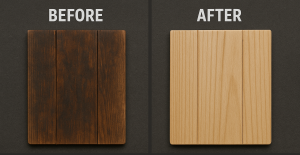
Wood Restoration
Removing old coatings from wood surfaces for restoration or industrial design
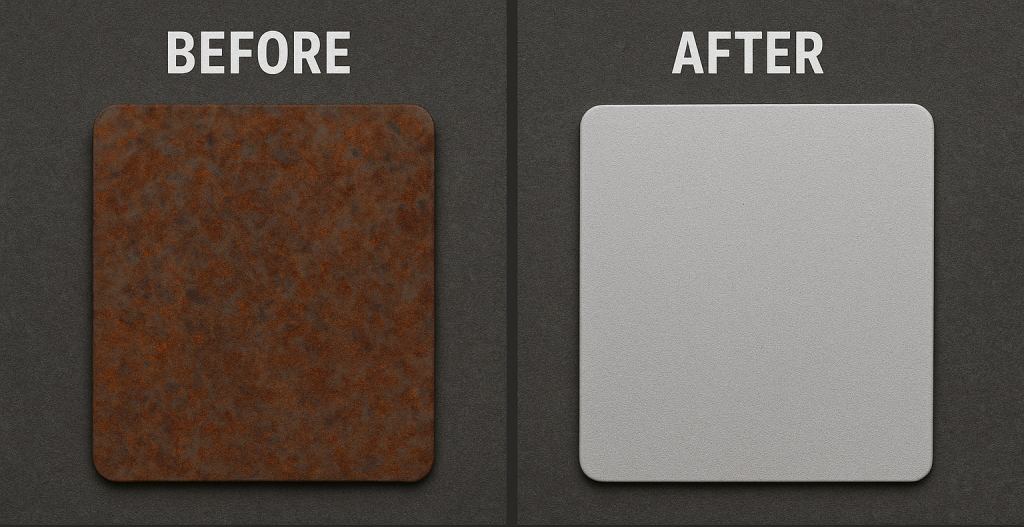
Metal Surface Prep
Stripping rust, old paint, or coatings before painting or welding
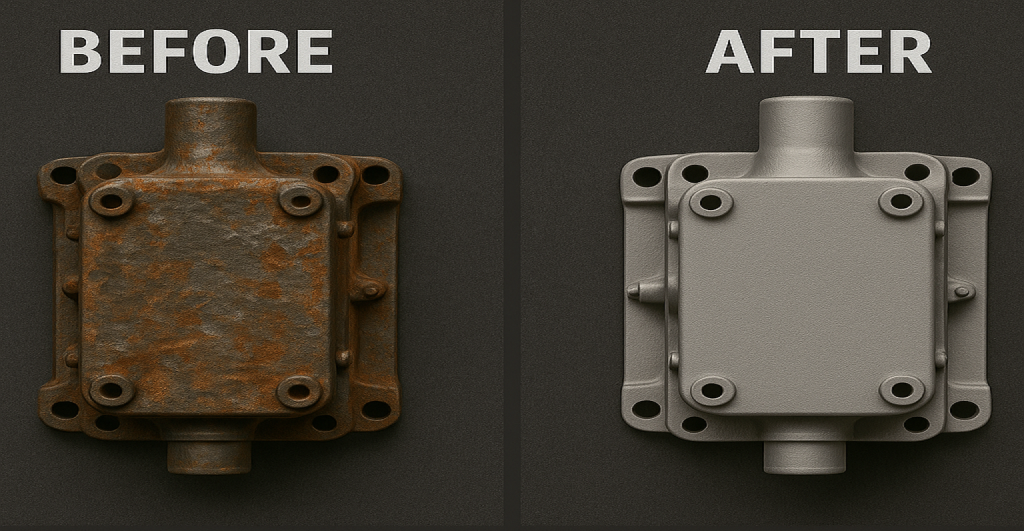
Industrial Equipment Refurbishing
Cleaning old machinery and corroded metal parts
